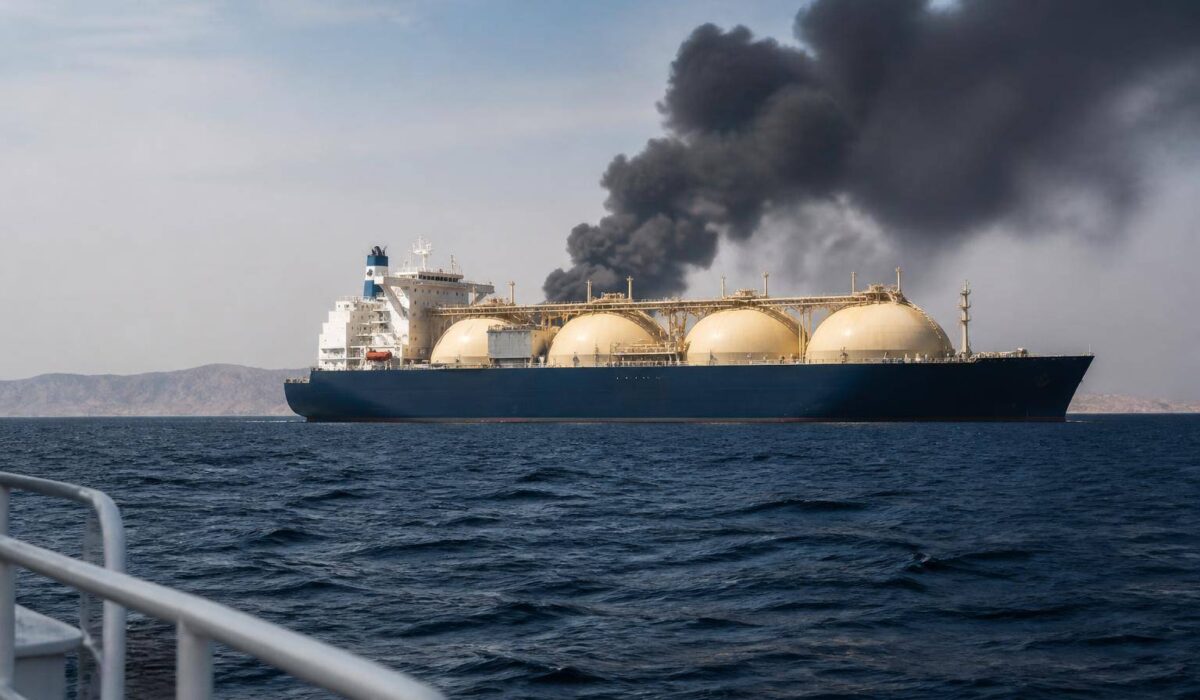
A recent incident involving a Qatari liquefied natural gas (LNG) tanker, the Al Rekayyat, has raised significant concerns regarding the safety of LNG transport. The vessel sustained considerable damage during an attack on the Omani side of the Strait of Hormuz, leading to fears of a potential explosion. This event highlights the vulnerabilities faced by LNG carriers amid escalating geopolitical tensions.
While the LNG industry has a solid safety record, with no catastrophic explosions reported on commercial LNG carriers at sea, the recent targeting of energy shipping vessels in conflict zones has prompted a re-evaluation of risks associated with LNG transport. The Al Rekayyat incident marks the second attack on an LNG vessel this year, following a March incident where the Russian tanker Arctic Metagaz caught fire due to a strike from Ukrainian naval drones.
Understanding Liquefied Natural Gas (LNG)
LNG is natural gas that has been cooled to approximately minus 162 degrees Celsius, transforming it into a liquid state and reducing its volume by about 600 times. This process makes it economically viable to transport LNG by ship. At export terminals, LNG is loaded into specialized carriers designed for safe transport, featuring double hulls and highly insulated cargo tanks to maintain low temperatures.
Storage and Transportation of LNG
During transport, a small amount of LNG naturally evaporates, creating what is known as boil-off gas. If not managed properly, this gas can increase the pressure inside storage tanks. However, LNG carriers are equipped with systems to capture this gas and utilize it as fuel for the ship’s engines, ensuring efficient operation.
Risks Involved with LNG
While LNG is non-flammable in its liquid state, risks arise if it leaks, warms to gas, and mixes with air in the right proportions, potentially leading to ignition. To mitigate these risks, LNG carriers employ several safety measures:
- Double-hull construction
- Multiple containment barriers
- Gas detection systems
- Pressure-relief equipment
- Emergency shutdown systems
- Firefighting equipment
- Strict operating procedures and crew training
Current Situation of the Al Rekayyat
The Al Rekayyat reported a fire in its engine room, which raised alarms about a possible explosion. Fortunately, there was no indication that the LNG tanks had been compromised, and the crew was safely evacuated. Experts emphasize that while any LNG carrier can face risks if damaged, modern vessels are designed with multiple layers of protection to prevent ignition from reaching cargo tanks.
Potential for Explosion: What Experts Say
Industry professionals note that a fire in the engine room does not automatically lead to an explosion. The risk of a catastrophic event would increase if the fire were to spread to cargo systems or damage containment tanks, potentially causing a significant LNG leak. As long as the Al Rekayyat is not subjected to further attacks, it is likely to remain stable.
The incident underscores the importance of stringent safety protocols and the need for continuous monitoring of LNG transport vessels, especially in conflict-prone regions. As geopolitical tensions persist, the LNG industry must remain vigilant to ensure the safety of its operations and the surrounding environment.