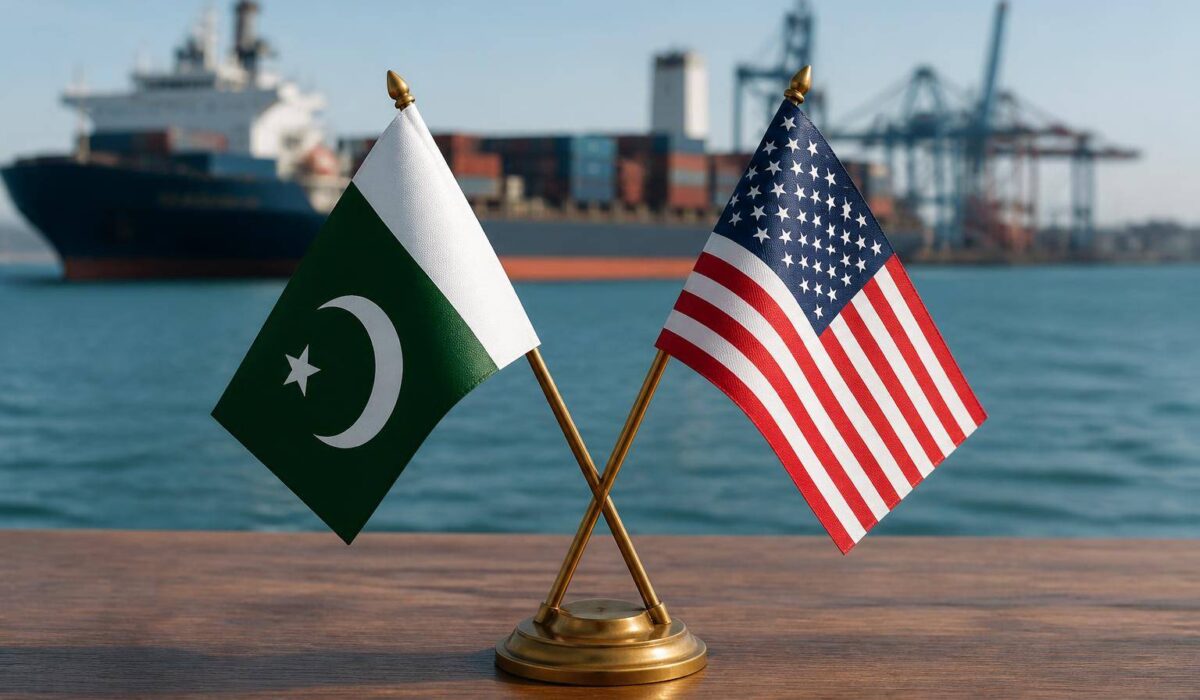
The relationship between Pakistan and the United States has long been shaped by geopolitical dynamics and security concerns. As both nations navigate a complex international landscape, the concept of offshore balancing emerges as a pragmatic framework for fostering cooperation. This approach, articulated by Professor Stephen Walt, suggests that the US can maintain a strategic presence in South Asia while avoiding direct military confrontations, particularly with China.
In the context of rising tensions and shifting alliances, understanding the implications of offshore balancing is crucial for both Pakistan and the US. This article delves into the strategic interests that underpin this potential partnership, particularly in light of the evolving situation in Afghanistan and the broader region.
Understanding Offshore Balancing
Offshore balancing is a strategic doctrine that advocates for a limited military presence while leveraging regional partnerships to maintain stability. According to Walt, this approach allows the US to reassure allies like Pakistan without provoking rivals such as China. By avoiding a direct military buildup, the US can focus on fostering cooperative relationships that enhance regional security.
The Geopolitical Landscape of South Asia
Pakistan’s geopolitical significance is amplified by its proximity to Afghanistan, a nation historically viewed as a battleground for competing global powers. The US has a vested interest in ensuring stability in this region, particularly as it grapples with the implications of China’s growing influence. The dynamics of US-China relations in South Asia are critical, as Washington seeks to prevent any single power from dominating the area.
The Taliban’s Impact on Regional Stability
The rise of the Taliban in Afghanistan poses significant challenges not only for Pakistan but for global security as well. The Taliban’s governance has led to increased instability, with the regime harboring terrorist groups that threaten regional peace. The US recognizes that a stable Pakistan is essential for countering these threats and maintaining its interests in the region.
Key US Interests in Pakistan
- Geopolitical Stability: The US aims to prevent a power vacuum in South Asia that could be exploited by rivals.
- Economic Opportunities: Pakistan’s mineral wealth, particularly in Balochistan, presents significant economic interests for the US.
- Counterterrorism: Addressing transnational terrorism is a top priority for the US, necessitating cooperation with Pakistan.
Economic Potential: The Mineral Wealth of Pakistan
Pakistan’s western provinces, particularly Khyber Pakhtunkhwa and Balochistan, are rich in untapped mineral resources. The Reko Diq deposit, for instance, is one of the largest undeveloped copper-gold deposits globally, with an estimated 5.9 billion tonnes of ore. This mineral wealth is crucial for the US, especially as it seeks to secure critical minerals for technology and energy transitions.
Enhancing Counterterrorism Capabilities
To bolster Pakistan’s ability to combat terrorism, the US could provide advanced military equipment and intelligence capabilities. This includes surveillance drones, helicopters, and AI-driven systems that enhance Pakistan’s capacity to detect and neutralize threats. Strengthening these capabilities is vital for ensuring regional stability and protecting US interests.
The evolving geopolitical landscape necessitates a proactive approach from the US in South Asia. By renewing counterterrorism cooperation with Pakistan and discouraging the use of Afghan territory for proxy warfare, the US can safeguard its long-term interests while contributing to regional stability. The offshore balancing strategy offers a framework for achieving these goals, fostering a more cooperative relationship between Pakistan and the US.