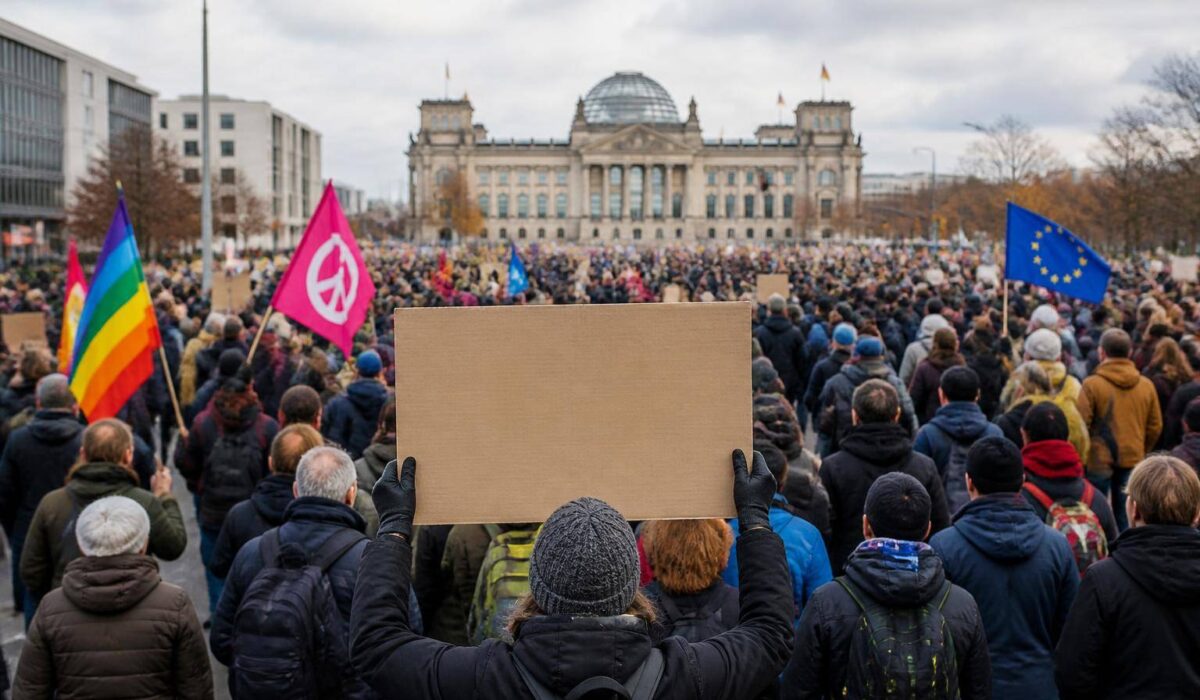
On Saturday, thousands of demonstrators gathered in Erfurt, Germany, to protest against the far-right Alternative for Germany (AfD) party, coinciding with its annual conference. The protests saw participants from unions, civil society groups, and left-wing parties, as police deployed significant reinforcements to manage the situation.
Protests and Police Presence
Protesters blocked major highways and roads leading to the convention center where the AfD was holding its two-day meeting. Police estimated that around 15,000 people participated in the demonstrations, which were closely monitored by officers in riot gear.
AfD’s Leadership and Rhetoric
During the conference, the AfD re-elected its leaders, Alice Weidel and Tino Chrupalla, who have been pivotal in the party’s rise in national polls. The opening speeches at the event criticized the protesters, branding them as anti-democratic. Weidel emphasized the party’s mission to combat what she described as Germany’s decline, urging supporters to join the fight for the nation’s identity.
Political Implications and Reactions
The AfD’s conference comes ahead of regional elections in Saxony-Anhalt and Mecklenburg-Vorpommern, which the party hopes will bolster its national ambitions. Critics, including anti-AfD group Widersetzen, voiced concerns over the rise of fascism in Germany. The AfD has been accused of promoting racist policies and undermining democratic values, with mainstream parties refusing to collaborate with them.
Recent polls indicate that the AfD’s support has surged to approximately 29%, surpassing the conservative CDU/CSU party, which stands at around 22%. This shift reflects growing disillusionment among voters, particularly in the former communist eastern regions of Germany.