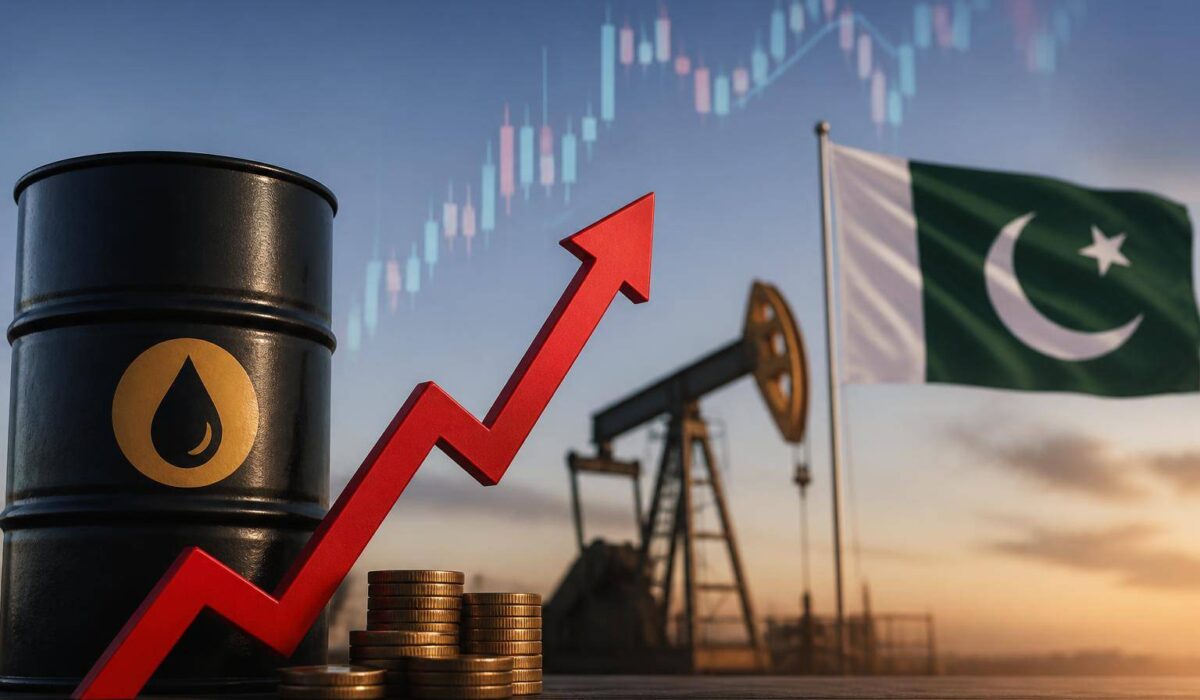
Recent developments in the global oil market have raised alarms for oil-importing countries, particularly Pakistan. Following fresh military strikes by the United States on Iran and renewed sanctions targeting Iranian crude oil exports, global oil prices have surged nearly 2%. This increase poses significant implications for Pakistan’s economy, which is heavily reliant on imported petroleum products.
Brent crude futures have risen by $1.38 to reach $75.54 per barrel, while US West Texas Intermediate (WTI) crude has increased by $1.37, now priced at $71.81 per barrel. The surge is attributed to escalating tensions in the Middle East, prompting investors to re-enter the oil market amid fears of potential supply disruptions.
Impact of Geopolitical Tensions on Oil Prices
The recent spike in oil prices follows the United States’ airstrike on Iran and the imposition of new restrictions on Iranian oil sales. This geopolitical uncertainty has reversed the downward trend observed last month, when crude oil prices had fallen to pre-conflict levels. As tensions continue to rise, the market remains on edge, and further fluctuations in oil prices are expected.
Pakistan’s Vulnerability to Oil Price Fluctuations
As a net importer of petroleum products, Pakistan’s economy is particularly vulnerable to changes in international crude oil prices. If the current trend continues, the country may face increased costs for oil imports, which could further strain its foreign exchange reserves and exacerbate the trade imbalance.
Higher oil prices are likely to lead to increased domestic petrol and diesel prices in upcoming reviews. This could have a cascading effect on transportation costs, electricity generation, and the prices of essential commodities across the nation.
Inflationary Pressures on the Pakistani Economy
Extended geopolitical tensions in the Middle East are expected to exert additional pressure on inflation in Pakistan. As businesses and consumers grapple with rising costs, the overall cost of living may become increasingly difficult to manage. The potential for higher fuel prices could lead to a broader economic impact, affecting various sectors reliant on stable energy costs.
Market Outlook and Future Projections
Energy analysts suggest that the future trajectory of oil prices will largely depend on the situation in the Middle East. Should the conflict between the United States and Iran escalate or if there are disruptions in oil supplies from the region, crude oil prices may continue to rise.
Policymakers in Pakistan are advised to closely monitor global energy markets, as ongoing volatility could significantly influence fuel pricing decisions, inflation rates, and the overall economic stability of the country in the weeks to come.
Key Takeaways
- Global oil prices have surged nearly 2% due to US military actions in the Middle East.
- Brent crude is now priced at $75.54 per barrel; WTI at $71.81 per barrel.
- Pakistan, as a net oil importer, may face increased fuel prices and inflation.
- Geopolitical tensions could lead to further volatility in oil prices.
- Policymakers need to monitor the situation closely for economic stability.
The current rise in global oil prices serves as a reminder of the interconnectedness of international markets and the direct impact such fluctuations can have on Pakistan’s economy. As the situation develops, it will be crucial for both consumers and policymakers to remain vigilant and prepared for potential changes in fuel pricing and economic conditions.