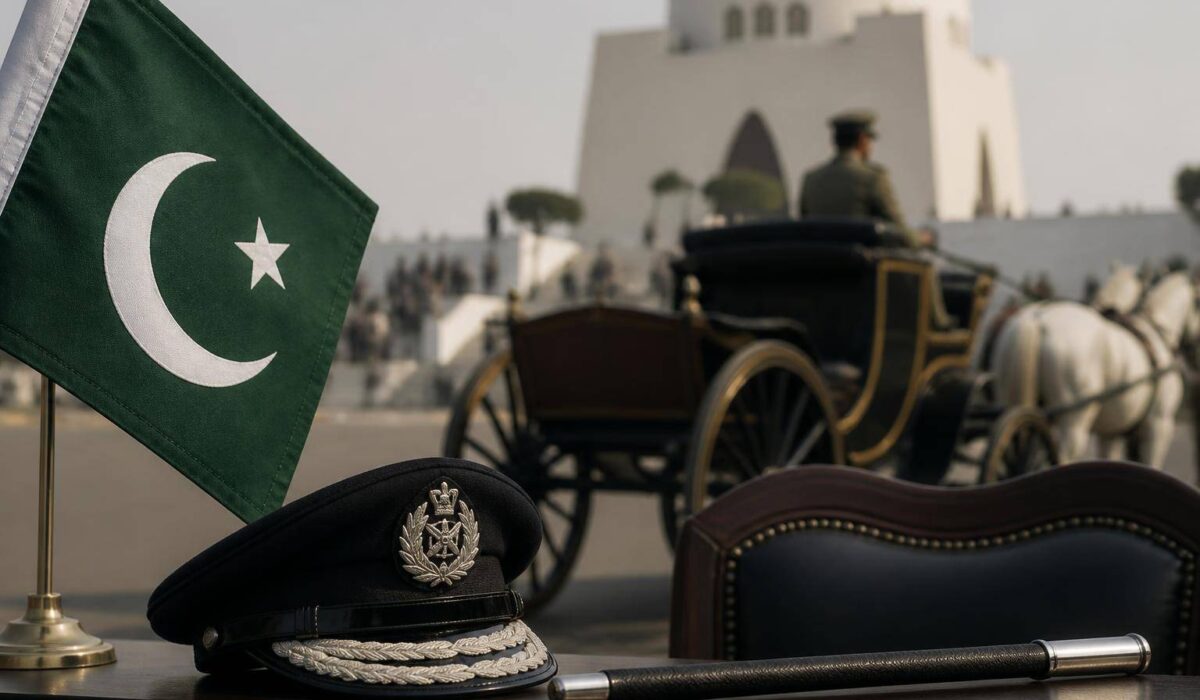
In a recent incident that has ignited widespread criticism on social media, Interior Minister Mohsin Naqvi has come to the defense of two government officials following the viral circulation of a video. The footage shows Capital Development Authority (CDA) Chairman retired Lt Sohail Ashraf and Islamabad Inspector General of Police (IGP) Syed Ali Nasir Rizvi riding in a horse carriage during an Independence Day parade in Islamabad.
The video, which quickly gained traction online, has led to a backlash against the officials, with many commentators likening their actions to a colonial mindset. The public’s reaction was notably muted, as the video captured a moment where attendees were prompted to applaud, but no claps were heard.
Details of the Incident
The Independence Day parade, a significant event in Pakistan’s national calendar, was marred by the officials’ choice of transportation. In response to the criticism, Naqvi took to social media platform X to clarify the circumstances surrounding the incident. He explained that the officials were compelled to use the horse carriage due to delays caused by a meeting between the president and the prime minister.
Naqvi stated, “The chief guest and I were delayed due to the president’s meeting with the prime minister. The crowd had been waiting since 5 PM, and at around 6:00 PM, when it became clear that we would be late, we instructed the officers to start the programme because we did not want the public to wait any longer.”
He emphasized that the carriage was initially arranged for the chief guest but was used by the officials out of necessity. Naqvi expressed gratitude to the residents of Islamabad for their participation in the event, describing it as a “true celebration.”
Public Reaction and Criticism
Despite Naqvi’s defense, the backlash continued. Former federal minister Shireen Mazari shared the video, criticizing the act as an “unbelievably stupid” attempt to revive colonial practices, labeling it as self-humiliation. Digital rights activist Usama Khilji echoed similar sentiments, stating, “This is what happens when you do things unbecoming of your office.”
Khili’s remarks highlighted a broader issue regarding the disconnect between the political class and the public, suggesting that while politicians must seek public support, bureaucrats operate with a sense of impunity reminiscent of the British Raj.
Media and Public Figures Weigh In
Journalists and public figures have also voiced their disapproval of the incident. Farzana Ali questioned the appropriateness of such displays in a country where economic hardships are prevalent, while Zarrar Khuhro simply described the scene as “CRINGE.”
Researcher Ammar Rashid pointed out the audience’s silence upon the carriage’s arrival, interpreting it as a sign of contempt for the officials. He remarked, “Anti-people DC Raj needs to go,” indicating a call for accountability within the bureaucracy.
Former Pemra chairman Absar Alam described the scene as “revolting,” criticizing the perceived inferiority complex of the bureaucratic elite. His comments reflect a growing frustration among the public regarding the behavior of high-ranking officials.
Comparisons with International Standards
In a striking contrast, former Sindh governor Mohammad Zubair highlighted the difference in behavior between Pakistani officials and their international counterparts. He juxtaposed the carriage incident with a video of the Norwegian foreign minister arriving in Islamabad, where the minister was seen handling his own luggage at the airport.
Zubair’s comments underscore a growing sentiment that Pakistani officials should adopt a more humble and service-oriented approach, especially in light of the country’s economic challenges.
Implications for Governance
This incident raises important questions about the conduct of public officials in Pakistan and their relationship with the citizenry. The backlash against the CDA Chairman and IGP reflects a broader discontent with the bureaucratic elite, which many perceive as disconnected from the realities faced by ordinary citizens.
The criticism also highlights the need for a cultural shift within Pakistan’s governance structures, where public servants are expected to embody humility and accountability. As the nation grapples with various socio-economic challenges, the actions and attitudes of its leaders will be under increasing scrutiny.
As discussions continue around this incident, it serves as a reminder of the expectations placed on public officials and the importance of their actions in shaping public perception and trust in governance.