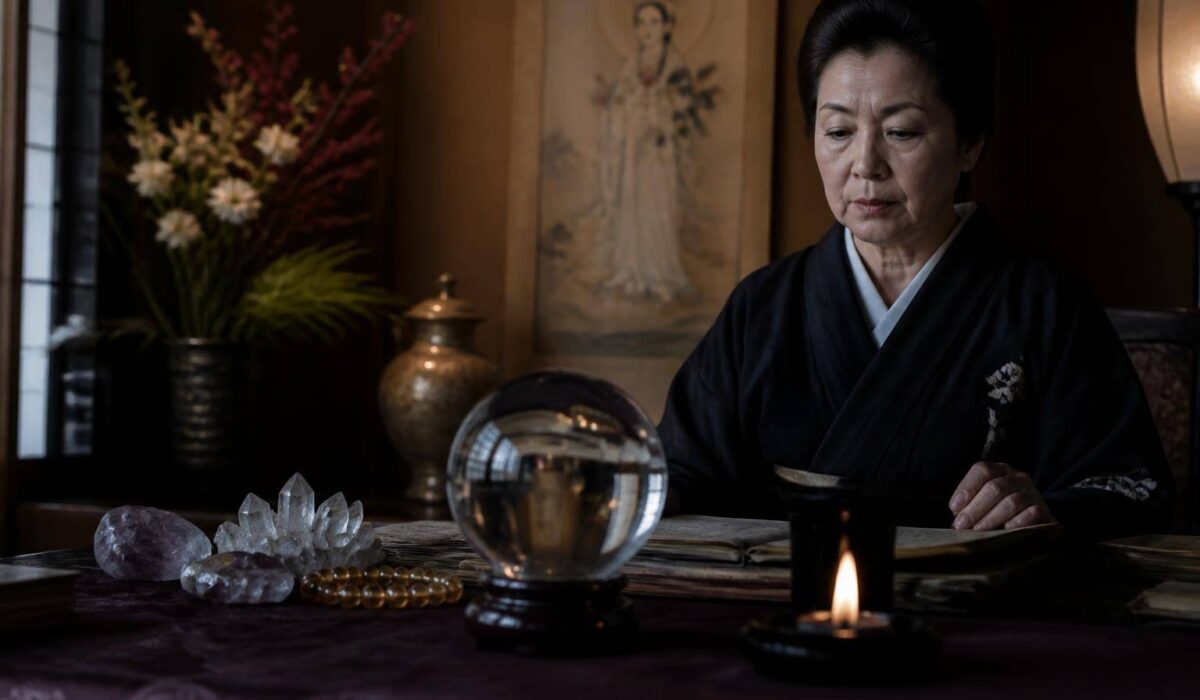
Netflix’s latest Japanese series, Straight to Hell, is a captivating biographical drama that transcends mere historical retelling. Directed by Norichika Oba and Tomoyuki Takimoto, and written by Manaka Monaka, the show delves into the life of Kazuko Hosoki, Japan’s most infamous fortune teller. This series not only chronicles her rise to fame but also explores the psychological ambition and cultural evolution that defined her journey.
Kazuko Hosoki’s story is one of reinvention, ambition, and the relentless pursuit of wealth. The narrative begins in post-war Tokyo, where we meet a young Kazuko, portrayed in her early years as a desperate girl navigating a war-torn landscape. As she grows, her fierce determination to escape poverty drives her into the cutthroat world of Tokyo’s nightlife, where she becomes a nightclub owner. However, her journey is fraught with challenges, including business failures and betrayals, reflecting the tumultuous economic landscape of Japan.
The Rise of a Cultural Phenomenon
At the heart of Straight to Hell is the character of Kazuko Hosoki, who becomes a cultural phenomenon by leveraging her skills in divination and her understanding of human desperation. As she evolves from a struggling young woman to a powerful fortune teller, the series highlights her ability to manipulate circumstances to her advantage. Kazuko’s journey is not just about personal success; it mirrors Japan’s own transformation from the ashes of World War II to a modern economic powerhouse.
A Visual and Narrative Masterpiece
The series excels in its visual storytelling, using distinct color palettes to reflect the different eras of Kazuko’s life. The early episodes depict a stark, desaturated Tokyo, emphasizing the trauma of a nation in recovery. As the narrative progresses, the visuals shift to vibrant tones that represent Japan’s economic boom, particularly during the 1964 Tokyo Olympics. This evolution in aesthetics parallels Kazuko’s own rise, making her story even more compelling.
The Dark Side of Ambition
Straight to Hell does not shy away from the darker aspects of Kazuko’s journey. The series explores the moral complexities of her character, portraying her as both an antihero and a villain. Each success is accompanied by deception, and every rise to power carries a hidden cost. The narrative critiques the capitalistic system that fosters such ruthlessness, illustrating how Kazuko’s actions are a product of her environment.
Erika Toda’s Unforgettable Performance
Erika Toda’s portrayal of Kazuko Hosoki is nothing short of remarkable. She captures the character’s evolution across different life stages, showcasing the stark contrast between the young, vulnerable Kazuko and the older, cynical media mogul. Toda’s performance is nuanced, allowing viewers to empathize with Kazuko’s struggles while also grappling with her morally ambiguous choices. This complexity adds depth to the character and keeps the audience engaged throughout the series.
The Intersection of Crime and Commerce
No exploration of post-war Tokyo would be complete without addressing the role of the Yakuza. Straight to Hell intricately weaves the influence of organized crime into Kazuko’s story, highlighting the blurred lines between legitimate business and criminal enterprises. The series portrays the Yakuza not as mere villains but as integral players in the socio-economic landscape of Japan, adding another layer of tension to Kazuko’s ascent.
A Flawless Narrative Flow
Despite spanning over half a century, the storytelling in Straight to Hell is seamless. The transitions between historical events and Kazuko’s personal journey are expertly crafted, with each era feeding into the next. The pacing shifts from a slow burn in the early episodes to a fast-paced exploration of the nightlife boom, keeping viewers on the edge of their seats. The series is visually stunning, with meticulous attention to detail in costume design and cinematography.
Straight to Hell is more than just a character study; it is a profound exploration of ambition, survival, and the complexities of human nature. By the end of the series, viewers may not fully love Kazuko Hosoki, but they will certainly understand her motivations and the world she navigated. This series stands as an unforgettable landmark in television, demanding attention for its storytelling and performances.